Produktskjermer
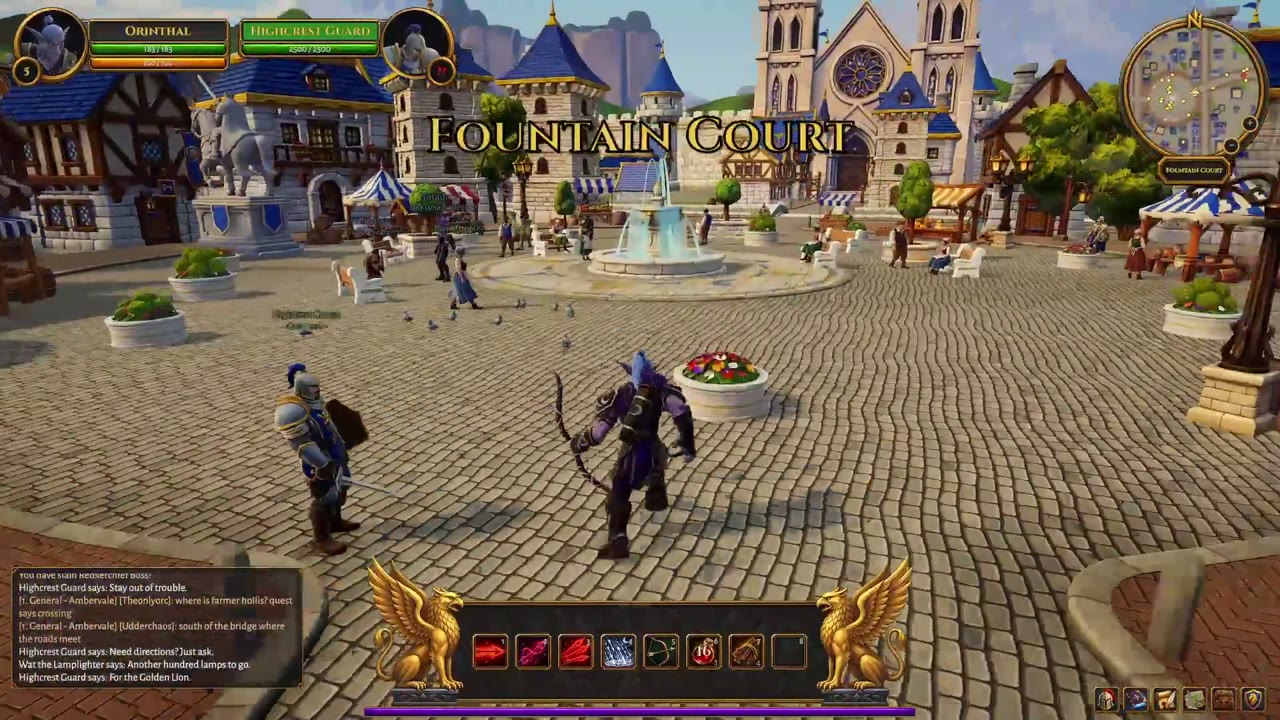
Old-school MMO town square with an elf archer and quest chat
16:9 · 1:17
av Stefan_3D_AI
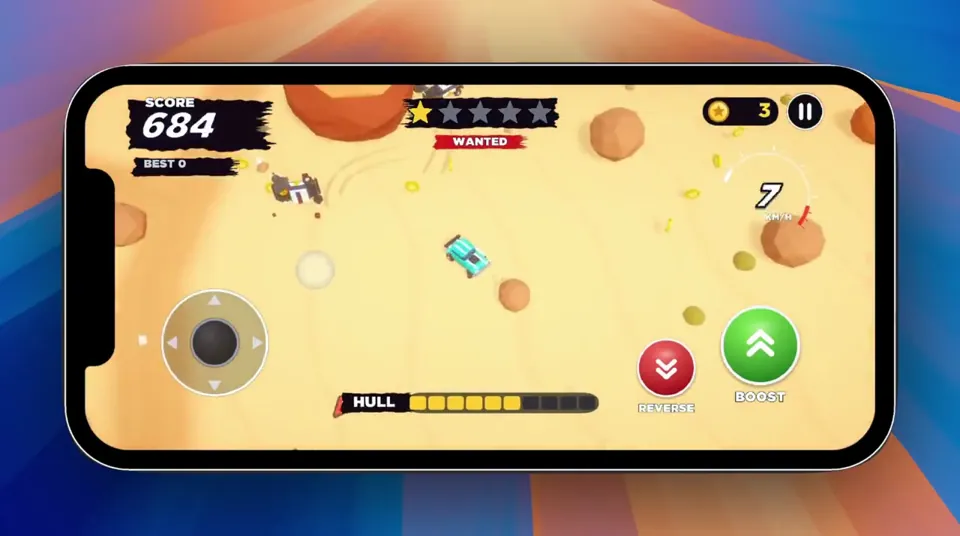
PRD — Police Chase Arcade Game Working title: Heatwave Platform: iOS + Android Engine: Unity Genre: Top-down 3D arcade chase / survival Orientation: Portrait Input: One-thumb touch controls Business model: TBD — design MVP around gameplay first Primary goal: Build a genuinely fun playable prototype before adding progression or monetization. ⸻ Product vision A fast, chaotic mobile arcade game where the player is constantly being pursued by increasingly aggressive police. The player cannot directly attack. Instead, they survive by driving aggressively, drifting around obstacles, making sudden turns and tricking pursuing police into crashing into obstacles and each other. The fantasy is: You’re not stronger than the police. You’re harder to catch. Runs should produce constant near-misses, chain collisions and moments where the player escapes a seemingly impossible situation. Think: easy controls + aggressive pursuit + physics chaos + escalating pressure. ⸻ Core gameplay loop START RUN ↓ DRIVE / DRIFT ↓ POLICE PURSUE ↓ BAIT POLICE ↓ DODGE ↓ POLICE CRASH ↓ GAIN SCORE ↓ WANTED LEVEL INCREASES ↓ MORE / HARDER POLICE ↓ SURVIVE ↓ EVENTUALLY GET CAUGHT ↓ SCORE / RESTART Target run duration: 2–5 minutes. Restart should take less than 2 seconds. ⸻ Design principles 3.1 One-thumb playable The player should be able to understand the controls within seconds. No accelerator. No brake pedal. No virtual steering wheel. The vehicle moves automatically. The player controls only direction. (I moved away from this after testing it the first time and added the onscreen joystick) 3.2 Arcade physics, not simulation Vehicles should: drift slide bounce spin collide dramatically recover quickly Fun takes priority over physical accuracy. 3.3 Pursuers are weapons Police are effectively the player’s offensive mechanic. The player should learn: “If I turn here, that cop is going straight into that wall.” 3.4 Chaos should remain readable Even with 10+ vehicles on screen, the player must immediately understand: where they are where they’re moving where police are coming from what can kill them 3.5 Failure should feel fair Death should generally result from a mistake the player understands rather than unpredictable physics. ⸻ MVP scope Do not build progression, upgrades, missions or monetization for the first milestone. The first version contains: 1 player vehicle 1 arena 1 police vehicle 1 elite police variant 5 wanted levels physics collisions environmental obstacles scoring player health police destruction basic VFX basic audio game-over screen instant restart That’s enough to determine whether the game deserves further development. ⸻ Player vehicle Movement Player vehicle uses a Rigidbody-based arcade controller. Do not rely heavily on realistic WheelColliders. Core variables should be exposed in the Unity Inspector: Acceleration Maximum Speed Turn Speed Turn Curve Lateral Grip Drift Factor Vehicle Mass Collision Force Drag Angular Drag Recovery Speed These need to be extremely easy to tune. ⸻ Controls Recommended first implementation: Drag steering Player touches anywhere on the lower portion of the screen. Dragging horizontally controls steering. ← drag turn left → drag turn right Vehicle accelerates automatically. Steering should be relative rather than absolute. The player should be able to lift their finger without immediately losing control. Alternative to prototype Test: Hold left/right side of screen = steer left/right. Don’t commit until both have been tested on a physical phone. ⸻ Drift system Drifting should happen naturally when turning at speed. No dedicated drift button. At low speed: high traction At high speed: reduced lateral traction This produces controlled sliding. Long drifts can optionally award score. Example: DRIFT +120 LONG DRIFT +340 But drift scoring is secondary to police destruction. ⸻ Police AI Police should feel: aggressive, predictable and slightly stupid. They should not simply follow the player’s current position. Instead, calculate an interception target based on player velocity. Conceptually: target = playerPosition + playerVelocity * predictionTime Police therefore try to cut the player off. ⸻ Police intelligence Police intentionally have limited obstacle avoidance. This is important. Perfect navigation would make the game less fun. Police should: pursue aggressively attempt interception avoid obvious static obstacles poorly account for other police overshoot turns collide with each other occasionally take dangerous routes This creates opportunities for the player. ⸻ Police destruction Police can be destroyed by: high-speed obstacle collisions hitting another police vehicle chain collisions environmental hazards The player does not have weapons. Example scoring: COP SMASHED +250 DOUBLE SMASH +600 TRIPLE SMASH +1,000 PILEUP! +2,000 Chain collisions should be heavily rewarded. ⸻ Wanted system Wanted level controls difficulty. ★☆☆☆☆ ★★☆☆☆ ★★★☆☆ ★★★★☆ ★★★★★ Wanted level increases based primarily on survival time and score. Level 1 2 police. Slow and forgiving. Level 2 3–4 police. Slightly faster. Level 3 5–6 police. More aggressive interception. Level 4 7–9 police. Elite police introduced. Level 5 Maximum chaos. 10+ police depending on device performance. Elite units appear frequently. The game should eventually become effectively impossible. That’s intentional. ⸻ Elite police The MVP only needs one special police type. Interceptor Visually distinct vehicle. Characteristics: faster than standard police lower mass aggressive prediction sharp steering easier to destroy in collisions This creates a glass-cannon pursuer. ⸻ Player health Use a simple health bar. Example: HULL ██████░░░░ Minor impacts: small damage. Heavy impacts: large damage. Extremely high-speed impacts: potential instant destruction. Police contact alone shouldn’t immediately kill the player. This allows chaotic scrambles. ⸻ Arena First arena should be compact. Something roughly equivalent to: ROCK ┌─────────────┐ │ │ │ ROCK │ │ │ │ ███ │ │ │ │ ROCK │ │ ROCK│ └─────────────┘ Obstacles need enough space between them for high-speed movement. Avoid procedural generation initially. Hand-design one good arena. ⸻ Environment For the first visual theme, I’d use something other than water so we’re not cloning the reference too closely. My preference: Desert outlaw chase Player is an outlaw escaping through a stylized desert environment. Environment contains: rock formations cacti barriers abandoned vehicles ramps fences small buildings dust destructible props It also fits the chunky visual language you’re already exploring with Bolt Pit. ⸻ Camera Top-down perspective camera. Not completely vertical. Something approximately: 55–70° downward angle. Camera follows player with smoothing. Camera should look slightly ahead in the player’s travel direction. At high speed: camera pulls back slightly. At low speed: camera moves closer. ⸻ Camera juice Small camera effects make a large difference. Light collision Tiny shake. Heavy collision Strong short shake. Police destruction Shake + tiny freeze frame. Example: 50–100 ms hit stop. Large pileup Slight zoom impulse + shake + particles. Don’t overdo continuous shaking. ⸻ Visual style Chunky stylized 3D. Characteristics: simplified geometry exaggerated proportions bright readable vehicles soft lighting minimal textures strong silhouettes exaggerated particles Avoid realistic vehicle proportions. Cars should feel almost toy-like. ⸻ VFX Minimum MVP effects: Player dust trail tire/skid marks drift smoke impact sparks Police siren lights smoke when damaged destruction explosion debris Environment dust destructible objects impact particles ⸻ Collision feedback Every significant collision should combine: physics + particles + audio + camera response. Major police destruction: IMPACT → physics impulse → vehicle fragments/debris → sparks → smoke → camera shake → hit stop → sound → score popup This interaction is one of the game’s main sources of satisfaction. ⸻ Score system Score comes from: ActionExample Surviving+10/sec Police destroyed+250 Driftvariable Near miss+100 Double collision+600 Triple collision+1,000 Large pileup+2,000 Exact values should remain configurable. ⸻ Near misses Optional for MVP but potentially valuable. Detect when a police vehicle passes extremely close to the player at high relative velocity. Display: CLOSE CALL! +100 This rewards risky driving. ⸻ UI During gameplay keep UI extremely minimal. SCORE COINS 13,590 14 ★★★☆☆ WANTED GAME HULL ████████░░ No minimap initially. Off-screen police can use subtle edge indicators. ⸻ Game over When hull reaches zero: brief slow motion. Player crashes. Then: BUSTED SCORE 24,850 BEST 31,220 [ AGAIN ] Tapping anywhere could restart. Avoid unnecessary menus between runs. ⸻ Audio The soundscape should sell speed and collisions. Required: engine tire squeal police sirens impact metal crunch debris destruction UI score sounds wanted level increase Sirens should become increasingly chaotic as wanted level increases. ⸻ Technical architecture Suggested Unity structure: GameManager Player ├── PlayerController ├── VehiclePhysics ├── PlayerHealth └── PlayerEffects Police ├── PoliceController ├── PoliceAI ├── VehiclePhysics ├── PoliceHealth └── PoliceEffects Systems ├── SpawnManager ├── WantedManager ├── ScoreManager ├── AudioManager ├── CameraManager └── PoolManager UI ├── HUD ├── WantedUI ├── ScoreUI ├── HealthUI └── GameOverUI Avoid building an elaborate framework. ⸻ Object pooling Police, particles and debris should use object pooling. Avoid frequent: Instantiate() Destroy() during gameplay. Mobile performance should be considered from the beginning. ⸻ Performance target Target: 60 FPS on a mid-range modern iPhone/Android device. Initial limits: ~12 active vehicles ~100 simple debris/particles simple shadows limited real-time lights Performance should be tested on device early. ⸻ Development milestones Milestone 1 — Greybox driving Build: empty arena cube player touch steering acceleration drifting camera Success criterion: Driving around an empty arena feels satisfying. Do not continue until it does. ⸻ Milestone 2 — The chase Add: one police vehicle pursuit AI interception collisions Success criterion: Dodging one police car is entertaining. ⸻ Milestone 3 — Emergent chaos Add: multiple police police-police collisions obstacles destruction scoring Success criterion: Player can intentionally cause: police → police and police → environment collisions. This is the critical milestone. ⸻ Milestone 4 — Escalation Add: wanted levels spawning difficulty scaling interceptor Now a run has an arc: calm ↓ pressure ↓ chaos ↓ panic ↓ death ⸻ Milestone 5 — Juice Add: particles camera shake hit stop skid marks dust sirens collision sounds score popups ⸻ Milestone 6 — Mobile build Build for real devices. Test: controls performance readability battery/thermal behaviour different screen ratios ⸻ Milestone 7 — Decide whether to continue At this point, stop development temporarily. Don’t immediately build a garage and 37 unlockable cars. Put the build in front of people. The important questions are: Do people immediately understand it? Do they restart after dying? Do they intentionally try to make cops crash? Does “one more run” happen naturally? If not, work on the core loop rather than adding content. ⸻ Phase 2 — only after validation If the prototype works, then expand into: Cars ↓ Coins ↓ Unlocks ↓ Challenges ↓ New arenas ↓ Special police ↓ Upgrades ↓ Daily challenges ↓ Leaderboards Potential environments: desert city docks snow industrial yard airport construction site military base And then there’s room for ridiculous police units: SUVs, armored vans, helicopters dropping roadblocks, etc. I have opened a @[Unity CLI installation] project which we can work in. The art style of the game should be fun and cartoony and the action also over the top. I have imported the Topdown engine into the project as well that we can use: https://topdown-engine.moremountains.com/ I want the game to be optimized for mobile, but should work on desktop while testing.
Produktskjermer
16:9 · 1:17
av Stefan_3D_AI
Én saldo med kreditter til AI-videoer og AI-bilder. Abonner månedlig eller årlig, eller kjøp en kredittpakke én gang.
Betal én gang · ingen abonnement
Videoer per pakke
Betal én gang · ingen abonnement
Videoer per pakke
Betal én gang · ingen abonnement
Videoer per pakke
Faktureres månedlig
Videoer per måned
Faktureres månedlig
Videoer per måned
Faktureres månedlig
Videoer per måned
Faktureres årlig · 240 USD → 192 USD/år
Videoer per måned
Faktureres årlig · 600 USD → 480 USD/år
Videoer per måned
Faktureres årlig · 1 200 USD → 960 USD/år
Videoer per måned
Videos use credits when you export, and starting one needs a balance that covers its export. Counts assume a 30-second product demo and a 60-second explainer with narration and 3 illustrations.
Hvordan Desert police-chase arcade game title screen ble laget, hva prompten sier, og hvordan du lager en lignende Produktskjermer-video med Potto.
Desert police-chase arcade game title screen er en motion graphics-video i Produktskjermer av froessell. A 59-second title screen for a top-down 3D desert police-chase arcade game built with threejs, canvas, and physics.
Desert police-chase arcade game title screen ble laget med three.js, Canvas, Physics og Playable. Den er en del av Produktskjermer-samlingen av AI motion graphics-videoer på Potto.
Ja. Hele prompten bak Desert police-chase arcade game title screen ligger på denne siden. Kopier den, eller klikk Bruk denne prompten for å åpne den i arbeidsområdet til Potto.
Desert police-chase arcade game title screen varer 0:59 i et 16:9-format.
Ja. Klikk Bruk denne prompten for å laste prompten bak Desert police-chase arcade game title screen inn i arbeidsområdet til Potto. Potto rendrer sin egen versjon, og du kan endre tekst og stil før du eksporterer.
Desert police-chase arcade game title screen ble først publisert av skaperen. Klikk Vis originalen for å åpne innlegget i en ny fane.
Se gjennom Produktskjermer-samlingen på Potto: 244 videoer, hver med prompt, spesifikasjoner og kilde.