- Length & ratio
- 0:20
- 1:1
- Made with
- Canvas
Prompt
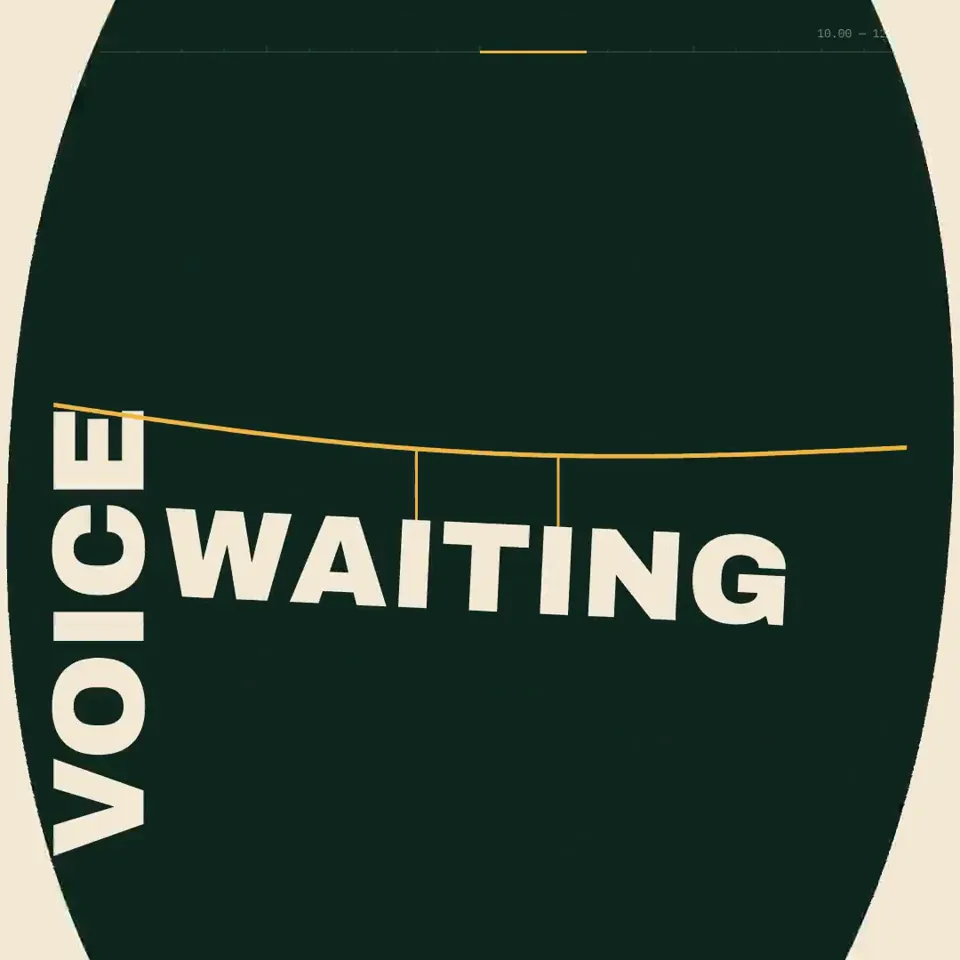
Create a 20.00-second kinetic spoken-word film titled “BUILD THE FLOOR.” Treat this as an original miniature speech staged entirely through typography. Every line changes the architecture of the frame. The final declaration must stand on something the earlier words physically constructed. Deliver one self-contained HTML file, 1080×1080, targeting 60fps, using SVG and/or Canvas. Embed all required assets. ART DIRECTION Background #102820. Paper # F4E9D5. Structural accent # F2B544. A literary editorial world with the scale and confidence of a public monument. Use a high-contrast serif for the speech, a heavy grotesque for load-bearing words, and a restrained monospace for small timing marks. No distressed protest-poster clichés, megaphones, flags, crowds, microphones, or stock footage. ORIGINAL SPEECH — EXACT WORDS, EXACT ORDER “We were told to wait.” “So we learned the weight of waiting.” “Then one voice made room.” “Then another.” “Now the floor belongs to us.” Do not attribute these words to any real person. No extra slogans. The complete speech must be understandable without audio. CENTRAL VISUAL RULE Words have assigned architectural roles. WAIT is a lintel. WAITING is a suspended load. VOICE is a support. ROOM is an opening. FLOOR is a platform. These roles must emerge from the actual letterforms, not from separate illustrations placed behind text. STORYBOARD 0.00–3.00 “We were told to wait.” The sentence occupies a narrow horizontal opening beneath a massive WAIT. The opening slowly compresses while the sentence remains readable. The pressure comes from the layout, not camera shake. 3.00–6.50 “So we learned the weight of waiting.” Reveal the sentence in spoken phrase groups. WAITING lowers on two fine vertical rules. Those rules become suspension cables. A baseline bends under the visual load using a controlled vector deformation. 6.50–10.00 “Then one voice made room.” VOICE enters vertically and rotates into a structural support. It lifts one end of the baseline. The counter of the O in ROOM becomes an aperture. The next composition is revealed through that aperture. 10.00–12.50 “Then another.” A second support arrives. The tilted structure levels. This is the first moment of perfect horizontal alignment in the film. Use a brief stillness to make the change feel earned. 12.50–16.00 “Now the floor belongs to us.” Earlier structural words assemble into a platform. The final sentence settles onto it. US receives emphasis through shared alignment and scale, never through a separate flashy effect. 16.00–18.00 Hold the complete declaration. A slight release of tension travels through the supporting rules. No new text. No restless decorative motion. 18.00–20.00 The camera tracks beneath the completed platform. Its underside fills the frame and becomes the opening WAIT lintel. Under full occlusion, return hidden elements to their initial positions. Reveal the exact opening composition. CHOREOGRAPHY Do not force the speech onto a dance beat. Use a cue sheet based on phrases, pauses, and emphasis. Phrase reveals should follow reading order. Allow at least one 400ms moment of absolute stillness. Use critically damped motion for settling loads. Use controlled elastic deformation for the baseline only. Make the changes in available space carry the emotional progression. TYPE IMPLEMENTATION Use actual glyph paths for structural words. Preserve counters and legibility during deformation. For transitions between unrelated words, use occlusion or matched structural edges; do not interpolate arbitrary path points. Keep the currently spoken phrase readable before it becomes architecture. ENGINEERING Implement window. seek(t) as a deterministic scene renderer. No accumulated physics, autonomous CSS transitions, or changing random values. Use time-remapping curves and analytic transforms. Use a 20-second periodic timeline with render(0)=render(20). Provide fixed-step access at n/60 for 1200 export frames. Audio is optional and off by default; no browser speech synthesis or autoplay dependency. QUALITY GATE Inspect eight representative frames. Check that the speech reads in the correct order. Check that structural transformations never destroy a line before the audience can read it. Check the final platform is visibly assembled from earlier elements. Return the complete HTML implementation.
More videos like this
View all

Choose Your Plan
One balance of credits for AI videos and AI images. Subscribe monthly or yearly, or buy a credit pack once.
2,000 credits
$20one-time
Pay once · no subscription
Videos per pack
30-second product demo13 videos
60-second explainer5 videos
- 2,000 credits, added once
- Up to 86 fast images
- No added Potto watermark
- Shared by video and image tools
5,000 credits
$50one-time
Pay once · no subscription
Videos per pack
30-second product demo33 videos
60-second explainer13 videos
- 5,000 credits, added once
- Up to 217 fast images
- No added Potto watermark
- Shared by video and image tools
15,000 credits
$100one-time
Pay once · no subscription
Videos per pack
30-second product demo100 videos
60-second explainer40 videos
- 15,000 credits, added once
- Up to 652 fast images
- No added Potto watermark
- Shared by video and image tools
Lite
Choose Lite$20/monthBilled monthly
Videos per month
30-second product demo13 videos60-second explainer5 videos- 2,000 credits per month
- Up to 86 fast images
- Standard queue
- No added Potto watermark
- Batch processing with AI tools
- Not listed in public galleries
Pro
Choose Pro$50/monthBilled monthly
Videos per month
30-second product demo33 videos60-second explainer13 videos- 5,000 credits per month
- Up to 217 fast images
- Priority queue
- No added Potto watermark
- Batch processing with AI tools
- Not listed in public galleries
- Recommended
Max
Choose Max$100/monthBilled monthly
Videos per month
30-second product demo100 videos60-second explainer40 videos- 15,000 credits per month
- Up to 652 fast images
- Highest priority queue
- No added Potto watermark
- Batch processing with AI tools
- Not listed in public galleries
Lite
-20%Choose Lite$20$16/monthBilled annually · $240 → $192/year
Videos per month
30-second product demo13 videos60-second explainer5 videos- 2,000 credits per month
- Up to 86 fast images
- Standard queue
- No added Potto watermark
- Batch processing with AI tools
- Not listed in public galleries
Pro
-20%Choose Pro$50$40/monthBilled annually · $600 → $480/year
Videos per month
30-second product demo33 videos60-second explainer13 videos- 5,000 credits per month
- Up to 217 fast images
- Priority queue
- No added Potto watermark
- Batch processing with AI tools
- Not listed in public galleries
- Recommended
Max
-20%Choose Max$100$80/monthBilled annually · $1,200 → $960/year
Videos per month
30-second product demo100 videos60-second explainer40 videos- 15,000 credits per month
- Up to 652 fast images
- Highest priority queue
- No added Potto watermark
- Batch processing with AI tools
- Not listed in public galleries
Videos use credits when you export, and starting one needs a balance that covers its export. Counts assume a 30-second product demo and a 60-second explainer with narration and 3 illustrations.
Kinetic typography poem where words become architecture FAQ
How Kinetic typography poem where words become architecture was made, what its prompt says, and how to make Kinetic Type videos like it with Potto.
What is Kinetic typography poem where words become architecture?
Kinetic typography poem where words become architecture is a motion graphics video by Gdgtify in the Kinetic Type collection. A 20-second kinetic typography film in which spoken-word lines build architectural structures on screen.
How was Kinetic typography poem where words become architecture made?
Kinetic typography poem where words become architecture was made with Canvas. It is part of the Kinetic Type collection of AI motion graphics videos on Potto.
Is the prompt for Kinetic typography poem where words become architecture available?
Yes. The full prompt behind Kinetic typography poem where words become architecture is on this page. Copy it, or click Use this prompt to open it in the Potto workspace.
How long is Kinetic typography poem where words become architecture, and what is its aspect ratio?
Kinetic typography poem where words become architecture runs 0:20 in a 1:1 frame.
Can I make Kinetic Type videos like Kinetic typography poem where words become architecture with Potto?
Yes. Click Use this prompt to load the prompt behind Kinetic typography poem where words become architecture into the Potto workspace. Potto renders its own version, and you can change the text and style before you export.
Where can I watch the original Kinetic typography poem where words become architecture?
Kinetic typography poem where words become architecture was first posted by its creator. Click View original to open that post in a new tab.
Where can I find more Kinetic Type videos like Kinetic typography poem where words become architecture?
Browse the Kinetic Type collection on Potto: 85 videos, each with its prompt, specs and source.